





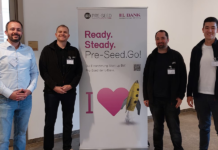






Interview Eugene Danilkis von Mambu
Wie entwickelt man ein Fintech, das nicht nur bestehende Systeme verbessert, sondern sie komplett neu denkt? Genau diesen Ansatz verfolgt Eugene Danilkis, Gründer des Unicorns Mambu. Im Interview spricht er darüber, warum traditionelle Bankenstrukturen lange Millionen Menschen ausgeschlossen haben, was echtes Skalieren bedeutet – und warum Unternehmenskultur oft die größte Herausforderung ist. Außerdem gibt er Einblicke in Europas Rolle als Tech-Standort und teilt seine Perspektive auf globale Innovation.
Anmerkung der Redaktion: wir haben das Interview mit Eugene auf englisch geführt. Die deutsche Übersetzung findet ihr unten.
Eugene, you didn’t found Mambu simply to build “a fintech”, but to rethink financial systems from the ground up. What was missing at the time?
We are big believers of interrogating the status quo with multiple “Why” to try to get to the root causes (or first principles) of why something is the way and then from there work towards reimaging how things could be. I feel strongly this way of thinking fundamentally leads to different outcomes than thinking how can something be better which can lead to improvements but they are more lateral. In our case we started with trying to first understand why over 2 billion people were unbanked around the world in 2010 and what negative effects that had on their lives or businesses. There were numerous barriers of course, but many barriers had a root cause in technology in terms of cost (for the banks to serve these customers) and access (in terms of reaching these individuals again at a reasonable cost). There were many very good practical reasons why the formal financial sector excluded these individuals but we realized that the root causes for the reasons wasn’t going to hold in the future. Cloud technology could bring down the cost to serve by an order of magnitude; Software as a Service could bring down the complexity and lack of systemic flexibility and integration; and mobile and internet penetration was rapidly coming for every part of the world which would solve the issue of cost. Given this we realized a need for a new fundamental platform build on new technology, new service model (SaaS) and new cost structure could enable bringing financial products into the market an order of magnitude faster and cheaper than had been possible with traditional banking software solutions built in the previous decades. The adoption started in emerging markets driven by cost and simplicity but a few years later the western markets also realized that they could build far better financial products and superior (digital-first) user experiences for many (often younger) customers who valued that over the traditional banking infrastructure. The values we imbued Mambu with technologically and culture in terms of speed, flexibility, agility and cost were then well aligned to also this wave of fintechs which were being launched globally by both venture-backed startups but also established financial institutions and banks themselves.
Mambu has grown extremely fast – in valuation, revenue and team size. What was harder to scale: the product or the company culture?
Absolutely the company culture. If you’re growing fast its because you have product market fit which means your product is fundamentally a good fit for the market. Of course you’ll continue to have improve it and grow and move it into new directions technologically and functionally to ensure you continue to innovate ahead of the market and meet the needs and complexity of a growing customer base in a difficult industry. Even if you get some technical decisions wrong, you can still adjust and there are more examples of companies doing massive technical rewrites (like Facebook) because the technology has moved on than those doing massive technical mistakes (like Sonos recently). Culture however is very difficult because it doesn’t scale linearly and its very difficult to course correct if it goes wrong. Communication complexity scales exponentially, so getting alignment on priorities, values, ways of working, decision making, guiding principles from a 10 person companies to a 100 person company isn’t 10X harder its likely 100X times. You’re hiring rapidly so often a large cohort of your employees are brand new and they themselves often are then interviewing and hiring other people and guiding them in how things are done, what’s important and spreading the culture. At the end culture is about ‘how do we do things here, especially when the boss isn’t looking’ so if you get that right then you do the right things at 10 people, 100 people and 1000 and more for your product, your customers, your shareholders etc. If you get it wrong then by definition the organizing is so big and so distributed and maybe even siloed that changing that is a monumental multi-year undertaking with a very high likelihood of failure.
What changes in a founder’s mindset when hundreds of millions are invested and the company suddenly carries a multi-billion-dollar valuation?
You fundamentally have higher pressure and stress on yourself which you, as a founder, carry around full-time regardless if you’re ‘working’ or if you managed to escape to the beach with your family. A large valuation for a startup is, by definition, high expectations about the future and both your ability to execute to get there and also very much about larger market trends and conditions (which you made informed assumptions about but cannot control). That i feel is always in the background but at the end of the day i don’t think you can make your business decisions based on valuations but on the reality of where you see the market opportunities and threats and your own strengths and weaknesses. I think its most important to just stay focused on not what other think our company is or will be worth (valuation) but on what the market and your actual customers are telling you (directly or not) about your actual products and services and use that to inform your strategy.
Europe is often seen as a difficult environment for scaling tech companies globally. What does it take to build more globally successful software companies from Europe?
Europe has come an amazing way from when we started Mambu to now. Not only has venture investment increased by an order of magnitude per annum but the entire european tech ecosystem went from relatively negligible with only a few bigger names to now having over a hundred billion-dollar companies and tech being a double-digit percent of European GDP. Europe is, by its very nature more difficult than say the US or China just because those are single markets with (mostly) a single currency, single regulations, single language and single culture for values they look for in adoption technology, buying technology, service expectations, etc. That is not the case in Europe. I believe for building globally successful companies you have to start with a global mindset from the beginning. In practical terms that means designing your technology, processes and culture to be able to scale it globally. Sometime it might even inform what you actually focus on building. For example we considered if building a consumer-focused fintech (so an actually digital bank or lender like N26) would make sense but since we felt we could have a bigger global impact by building the platform to enable others to locally build the fintechs in countries around the world. So deciding what you focus on, what part of the value chain you focus your product and services on and how you scale those globally (directly or via partners) and having that global mindset built in from day one i think are very important if you want to scale global quickly. But i believe founders should have a good answer as to Why they want to scale globally, understand what that will imply in terms of costs, complexity, products, service, culture and go into that fully knowingly.
In September, you’ll be joining us at CyberForum in Karlsruhe to exchange ideas with the network on technology, growth and innovation. What are you most looking forward to about that conversation?
I believe what made Silicon Valley so successful in terms of being a centre of innovation is partially the community that was built around people doing something new and exchanging ideas with those that have done something before. Both sides have something to learn but i believe its in that exchange process itself, the questions asked, trying to understand what worked and what didn’t work and why that help people find the right and best paths for themselves and their businesses. For myself I enjoying connecting with other founders to learn about what problems and opportunities they see in the world and how they are going about solving them especially in industries and markets which I’m interested in but have little personal experience. A founder to me is a very unique and interesting individual because they are trying to transform some part of some industry for the better and also at the same time are themselves often being transformed by the journey of creating and growing a business and all the demands it put on them intellectually and emotionally. It feels closest to me to the journey of explorers of the Age of Discovery where you set sail for unknown lands, bringing back fortune or failure and being yourself transformed by the act of exploration itself.
Deutsche Version:
Ihr habt Mambu nicht einfach gegründet, um ein weiteres „Fintech“ zu bauen, sondern um Finanzsysteme grundlegend neu zu denken. Was hat damals gefehlt?
Wir haben stark daran geglaubt, den Status quo immer wieder mit der Frage „Warum?“ zu hinterfragen, um zu den eigentlichen Ursachen zu gelangen – also zu den grundlegenden Prinzipien, warum etwas ist, wie es ist. Von dort aus kann man neu denken, wie Dinge sein könnten.
Ich bin überzeugt, dass diese Denkweise zu völlig anderen Ergebnissen führt, als einfach nur zu überlegen, wie man etwas verbessern kann – das führt oft nur zu schrittweisen Optimierungen.
In unserem Fall haben wir zunächst versucht zu verstehen, warum im Jahr 2010 weltweit über 2 Milliarden Menschen keinen Zugang zu Bankdienstleistungen hatten – und welche negativen Auswirkungen das auf ihr Leben und ihre Unternehmen hatte. Natürlich gab es viele Hürden, aber viele davon hatten ihre Ursache in der Technologie:
- Kosten – also die Kosten für Banken, diese Kunden zu bedienen
- Zugang – also die Möglichkeit, diese Menschen überhaupt wirtschaftlich sinnvoll zu erreichen
Es gab viele nachvollziehbare Gründe, warum der formelle Finanzsektor diese Menschen ausgeschlossen hat. Gleichzeitig haben wir erkannt, dass diese Ursachen langfristig nicht bestehen bleiben würden.
Cloud-Technologie konnte die Kosten drastisch senken.
Software-as-a-Service reduzierte Komplexität und mangelnde Flexibilität.
Und die zunehmende Verbreitung von Internet und mobilen Geräten löste das Zugangsproblem.
Dadurch wurde klar: Es braucht eine neue Plattform – aufgebaut auf neuer Technologie, einem neuen Servicemodell (SaaS) und einer neuen Kostenstruktur. Diese ermöglicht es, Finanzprodukte deutlich schneller und günstiger auf den Markt zu bringen als mit klassischer Bankensoftware.
Die ersten Kunden kamen aus Emerging Markets – getrieben durch Kosten und Einfachheit. Einige Jahre später erkannten auch westliche Märkte das Potenzial: bessere Finanzprodukte und überlegene digitale Nutzererlebnisse, insbesondere für jüngere Zielgruppen.
Die Werte, die wir technologisch und kulturell bei Mambu verankert haben – Geschwindigkeit, Flexibilität, Agilität und Effizienz – passten dann perfekt zu der globalen Fintech-Welle, die sowohl von Startups als auch von etablierten Institutionen vorangetrieben wurde.
Mambu ist extrem schnell gewachsen – bei Bewertung, Umsatz und Teamgröße. Was war schwieriger zu skalieren: das Produkt oder die Unternehmenskultur?
Ganz klar: die Unternehmenskultur.
Wenn ein Unternehmen schnell wächst, bedeutet das in der Regel, dass es Product-Market-Fit hat – also ein Produkt, das gut zum Markt passt. Natürlich muss man es weiterentwickeln, um innovativ zu bleiben und mit der steigenden Komplexität der Kundenbedürfnisse Schritt zu halten. Selbst wenn technische Entscheidungen einmal nicht optimal sind, kann man sie meist korrigieren.
Kultur hingegen lässt sich nicht linear skalieren – und Korrekturen sind extrem schwierig.
Die Komplexität der Kommunikation steigt exponentiell. Der Sprung von 10 auf 100 Mitarbeitende ist nicht zehnmal so schwer – eher hundertmal. Gleichzeitig stellt man viele neue Menschen ein, die wiederum selbst einstellen und die Kultur weitertragen.
Am Ende bedeutet Kultur: Wie arbeiten wir hier – besonders dann, wenn niemand hinschaut?
Wenn das funktioniert, trifft man die richtigen Entscheidungen – egal ob bei 10, 100 oder 1.000 Mitarbeitenden. Wenn nicht, wird es extrem schwierig, das später zu korrigieren.
Was verändert sich im Mindset eines Gründers, wenn plötzlich Hunderte Millionen investiert werden und das Unternehmen Milliarden wert ist?
Der Druck steigt – und zwar dauerhaft. Als Gründer trägt man diese Verantwortung immer, egal ob im Arbeitsalltag oder im Urlaub.
Eine hohe Bewertung bedeutet vor allem hohe Erwartungen an die Zukunft: an die eigene Fähigkeit, diese zu erreichen – aber auch an Marktbedingungen, die man nur begrenzt beeinflussen kann.
Trotzdem sollte man Entscheidungen nicht auf Basis der Bewertung treffen, sondern auf Basis realer Marktchancen und Risiken sowie der eigenen Stärken und Schwächen.
Viel wichtiger ist es, sich nicht darauf zu konzentrieren, was andere glauben, was das Unternehmen wert ist, sondern darauf, was der Markt und die eigenen Kunden tatsächlich rückmelden – direkt oder indirekt. Das sollte die Strategie leiten.
Europa gilt oft als schwieriges Umfeld, um global erfolgreiche Tech-Unternehmen aufzubauen. Was braucht es dafür?
Europa hat sich enorm entwickelt, seit wir Mambu gestartet haben. Die Investitionen sind stark gestiegen, das Ökosystem ist gewachsen, und Tech hat einen deutlich größeren Anteil an der Wirtschaft.
Trotzdem ist Europa strukturell komplexer als die USA oder China: unterschiedliche Märkte, Sprachen, Regulierungen und Kulturen.
Deshalb ist ein globales Mindset von Anfang an entscheidend.
Das bedeutet konkret:
- Technologie, Prozesse und Kultur von Beginn an global skalierbar denken
- bewusst entscheiden, welchen Teil der Wertschöpfungskette man bedient
Ein Beispiel: Wir haben bewusst gegen ein eigenes Endkunden-Fintech entschieden und stattdessen eine Plattform gebaut, die andere weltweit befähigt, lokale Fintechs aufzubauen.
Wer global skalieren will, sollte also genau wissen:
- Warum möchte ich global wachsen?
- Welche Kosten und Komplexität entstehen dadurch?
Und diese Entscheidung bewusst treffen.
Im September bist du beim CyberForum in Karlsruhe zu Gast. Worauf freust du dich besonders?
Ein großer Erfolgsfaktor des Silicon Valley war die Community: Menschen, die Neues ausprobieren und sich miteinander austauschen – zwischen denen, die schon Erfahrung haben, und denen, die etwas Neues aufbauen.
Beide Seiten lernen voneinander. Besonders wertvoll ist der Austausch selbst: die Fragen, die Reflexion darüber, was funktioniert hat – und warum.
Ich selbst finde es spannend, mit anderen Gründern über ihre Herausforderungen und Chancen zu sprechen – gerade in Bereichen, in denen ich wenig eigene Erfahrung habe.
Für mich sind Gründer außergewöhnliche Persönlichkeiten: Sie versuchen, Branchen zu verändern – und werden dabei selbst durch diesen Prozess verändert.
Es erinnert mich an Entdecker früherer Zeiten: Man bricht auf in unbekanntes Terrain, kehrt mit Erfolg oder Misserfolg zurück – und ist dabei selbst ein anderer geworden.


